About Medical Voices
Medical English for learners and healthcare professionals
Medical Voices is a free English-learning podcast and YouTube channel that teaches the language of healthcare through realistic doctor–patient conversations. It is for English learners at B1–C1 and especially for nurses and doctors who work in English or are preparing for OET or IELTS.
- Free — every episode and every transcript
- 22 episodes and counting
- Levels B1 to C1, marked on every episode
- New episodes every Tuesday and Friday
- On YouTube and every major podcast app
For the Med Nomads
We call our community the Med Nomads: everyone who has crossed a border and had to find the words for health in a new language.
The nurse rebuilding her career in a new country. The international doctor finding their voice on a foreign ward. The student who learned medicine in one language and will practise it in another. And the parent in a waiting room abroad, trying to explain that their child's fever started last night.
We believe no one should feel like a stranger in the place they came to heal — or to be healed. So we make the language of medicine learnable, dignified and free.
Who it's for
Learning English?
Start with Everyday Consultations: short B1 scenes at the doctor's, the pharmacy and the dentist. You hear both sides of the conversation, then practise the words you need.
Start here
Explore Everyday ConsultationsNurse or doctor working in English?
Build your clinical English with Medical English Lessons every Tuesday, B2–C1: history taking, handover, explaining a diagnosis and difficult conversations.
Start here
- Ep. 22 · Pain history in English · B1
- Ep. 21 · Calling the Doctor Overnight (SBAR) · B2
- Ep. 18 · Chest Pain in the ED · B2
Preparing for IELTS or OET?
Every episode trains the listening and speaking these exams test: real accents, natural speed, clinical and everyday vocabulary. Our study guide shows how to turn an episode into exam practice.
Start here
Open the study guideFour ways to listen
Clinical English for nurses and doctors. B2–C1 · 18–20 min · every Tuesday · free PDF transcript.
Everyday ConsultationsEveryday medical situations from both sides. B1 · 12–16 min · every other Friday · free PDF transcript.
Nadia & Tom TalkRelaxed conversations with phrases worth keeping. B1–B2 · 25–40 min · every other Friday · free PDF transcript.
MarathonsOur best consultations back to back for long listening practice. B1–C1 · 1.5–3 hours · monthly · links to each episode's transcript.
How the episodes work
Five parts, the same every week, so you can use them as a study rhythm:
- ① Welcome (~2 min) — Nadia and Tom introduce the topic and what you'll be able to say by the end. A short language-learning disclaimer is included.
- ② Vocabulary (~3 min) — 10 key terms, each with a plain definition and an example sentence.
- ③ Role-play (~8 min) — a realistic consultation at natural speed, then the key exchanges again, more slowly.
- ④ Language breakdown (~4 min) — 5–6 expressions from the dialogue: nuance, common mistakes, formal and informal register, and UK, US, Australian and Canadian differences where they matter.
- ⑤ Quiz and wrap-up (~2 min) — three questions with a pause to answer before you hear the solution.
One everyday scene, heard from both sides:
- ① The scene at natural speed.
- ② A slow repeat.
- ③ Two sides: what the doctor, nurse or receptionist says, and how the patient answers.
- ④ Your turn: you say the line before you hear it.
A relaxed conversation on one topic, with 8–10 useful phrases explained along the way. Good for listening on the go.
Free PDF transcript for every episode
Each episode page has a free PDF with the full transcript and the key vocabulary, plus exercises on most episodes. Enter your email, click the secure link we send you, and the PDF downloads. We'll also email you when a new episode comes out — unsubscribe anytime.
Choose an episodeMeet Nadia and Tom
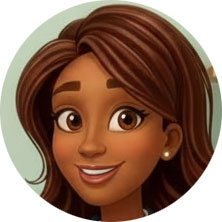
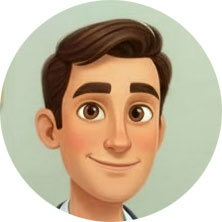
Nadia and Tom host every episode. Nadia leads with a clear, neutral accent; Tom brings a calm, British-neutral voice. They're written as experienced healthcare practitioners who love teaching, and they also play the characters in each scene: doctors, nurses, pharmacists, receptionists and patients.
Nadia and Tom are characters. Their voices are created with AI voice technology, and every script is written and checked by a human producer following our production quality guide.
Language, not medical advice
Medical Voices teaches language, not medicine. Scenarios are written to reflect real clinical practice, and episodes on sensitive topics get an extra review before they're published. We don't name brand medicines or give doses. Nothing here is medical advice — if you are unwell, talk to a doctor or pharmacist.
Why is it free?
We think the language of healthcare shouldn't depend on paying for expensive courses. Every episode and transcript is free.
The project is funded by YouTube ads, by our channel partner E2 Language (Medical Voices learners get 26% off their IELTS and OET courses with code MDV26, and we earn a commission at no extra cost to you), and by a few clearly marked affiliate links. Viewers who want to support the show can also join our optional YouTube channel membership.
Frequently asked questions
What level of English do I need?
Everyday Consultations are B1, Nadia & Tom Talk is B1–B2, and the Tuesday Medical English Lessons are B2–C1. Every episode shows its level, and you can filter episodes by level on the episodes page.
Do I need to work in healthcare to use Medical Voices?
No. Many listeners are English learners who want to understand doctors, describe symptoms or handle a pharmacy visit in English. Start with Everyday Consultations (B1). Nurses and doctors will get the most from the Tuesday Clinical English lessons (B2–C1).
What does 'Med Nomads' mean?
It's what we call our community: anyone who has crossed a border and had to find the words for health in a new language — nurses and doctors building a career abroad, students, and learners who will one day sit in a waiting room speaking English.
Will this help with IELTS or OET?
Yes, as practice alongside a course. Episodes train the listening and speaking skills both exams test, with real clinical and everyday situations — useful for IELTS General, IELTS Academic and OET. For a full course, our channel partner E2 Language offers 26% off with code MDV26. See our study guide for how to practise with episodes.
Are Nadia and Tom real people?
No. They're characters voiced with AI voice technology. Every script is written and checked by a human producer, and the scenarios are based on real clinical practice.
Is the content medically accurate?
Scenarios and vocabulary are checked against clinical sources, and sensitive topics get an extra review before publication. The content is for language learning only and is not medical advice.
Can I use Medical Voices in a class?
Yes. Teachers and trainers are welcome to play episodes and share the free transcripts with learners. Please credit Medical Voices and link to medicalvoices.health. For anything else, contact us.
Is there a French version?
Yes. Voix Médicales is our companion channel in French, for healthcare professionals and learners working in French — from France and Belgium to Switzerland, Québec and across the French-speaking world.
How do I get the free transcript?
Open any episode page, enter your email and click the secure link we send. The PDF downloads straight away.
Stay in touch
Recommended Resources
Affiliate links — we may earn a small commission at no cost to you.
26% OFF OET & IELTS packages with E2 Language
Discount code: MDV26
Get 26% off →Affiliate link — we may earn a small commission at no cost to you.